Tuma
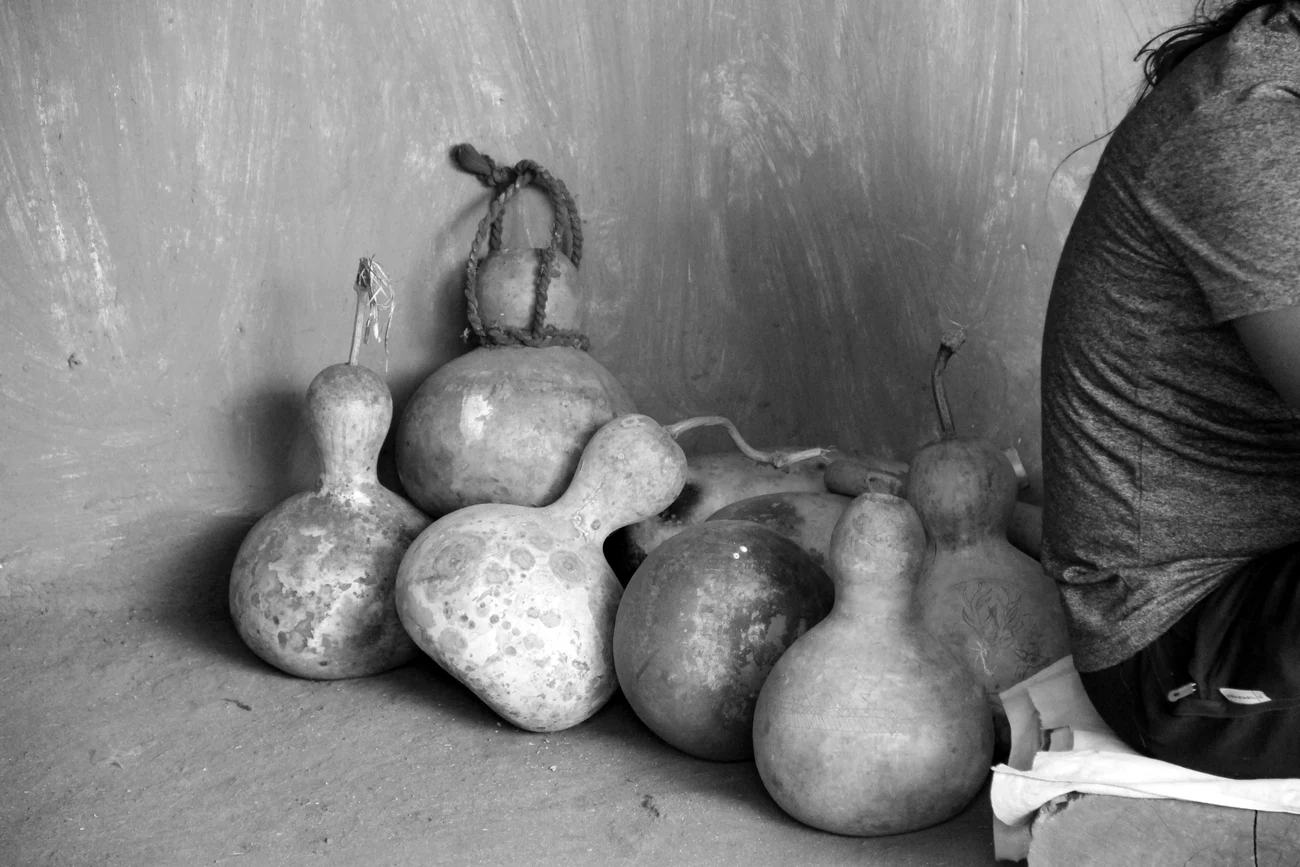
A bottle gourd dries into a hard, light shell. In Bastar, it has long served as a vessel for water and local drinks. Artisans work with the curves already grown into it.
Bastar, Chhattisgarh
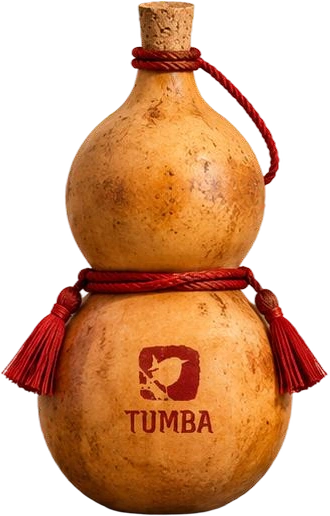
Tumba brings two things from Bastar together in one bottle. The vine gives it a shape, the forest gives it a spirit, and the hands that make it leave their mark.
A bottle gourd dries into a hard, light shell. In Bastar, it has long served as a vessel for water and local drinks. Artisans work with the curves already grown into it.
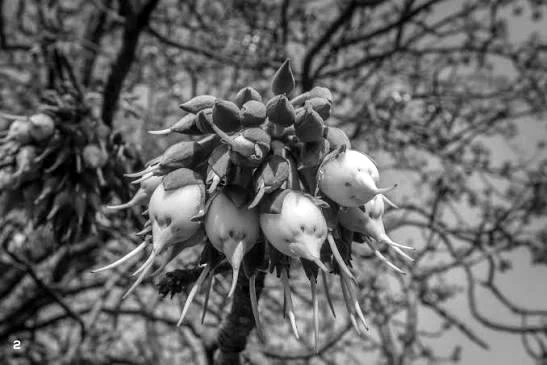
Families gather the sweet flowers that fall from the mahua tree. The flowers are dried and used in food and in a spirit shared at gatherings and celebrations.
The Making
Follow the gourd from harvest to carving, and the mahua flower from the forest floor to the spirit it becomes.
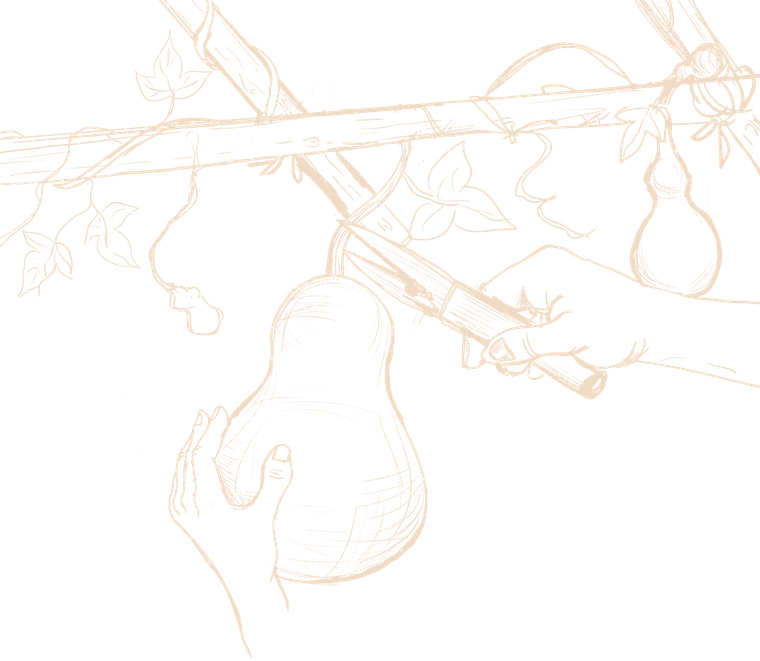
The gourd is picked by hand after its skin begins to harden.
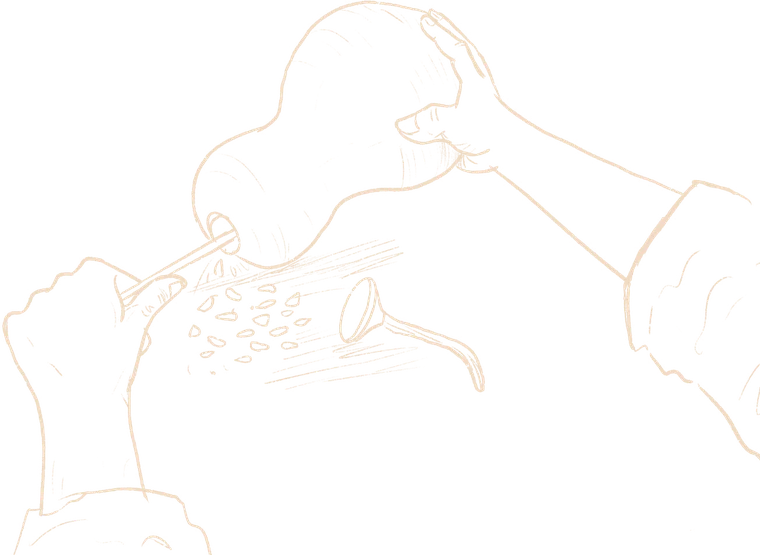
The seeds and pulp are removed, and the hollow shell is left to dry.
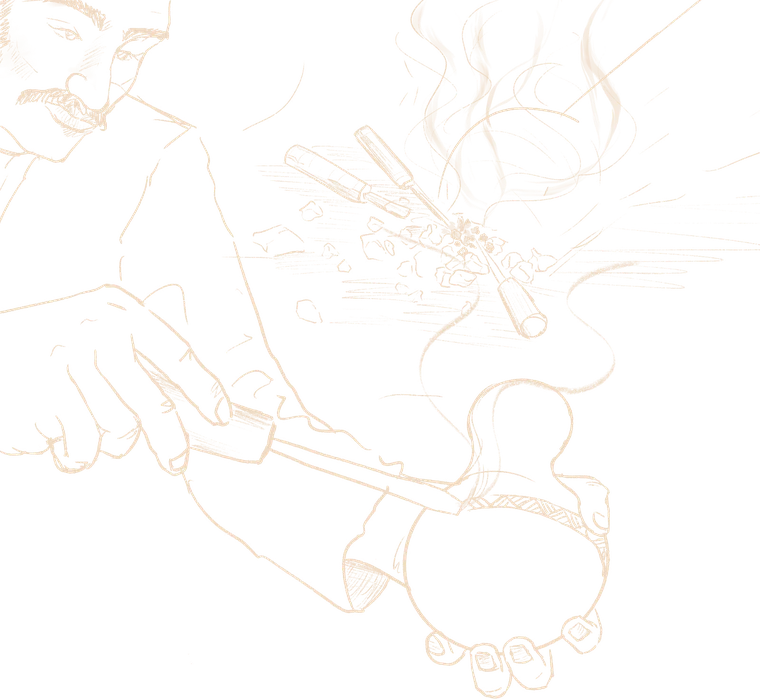
A heated tool traces the pattern into the dried shell by hand.
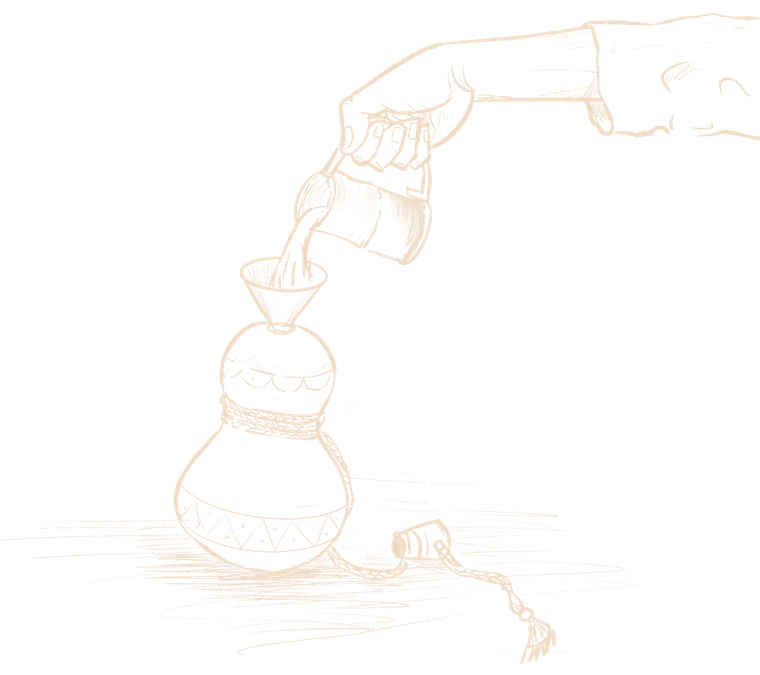
Mahua spirit is poured into the carved vessel.
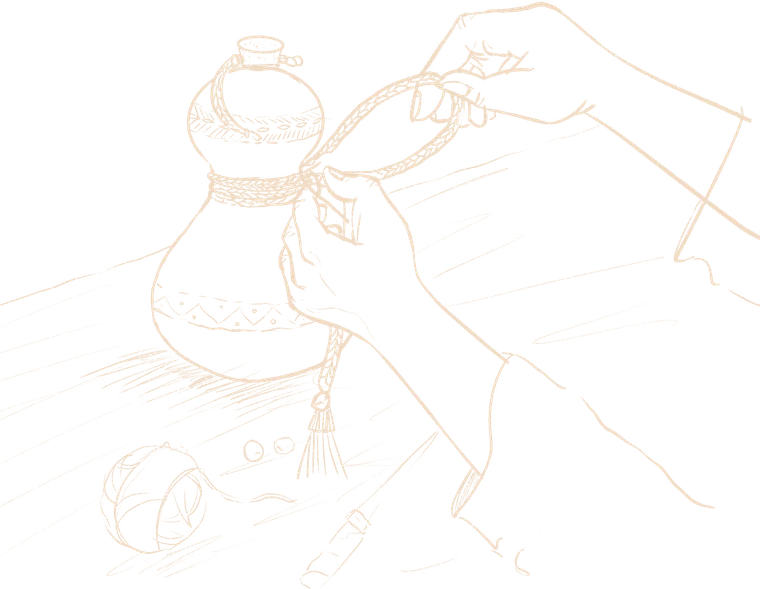
A cork seals the vessel and a red cord is tied by hand.
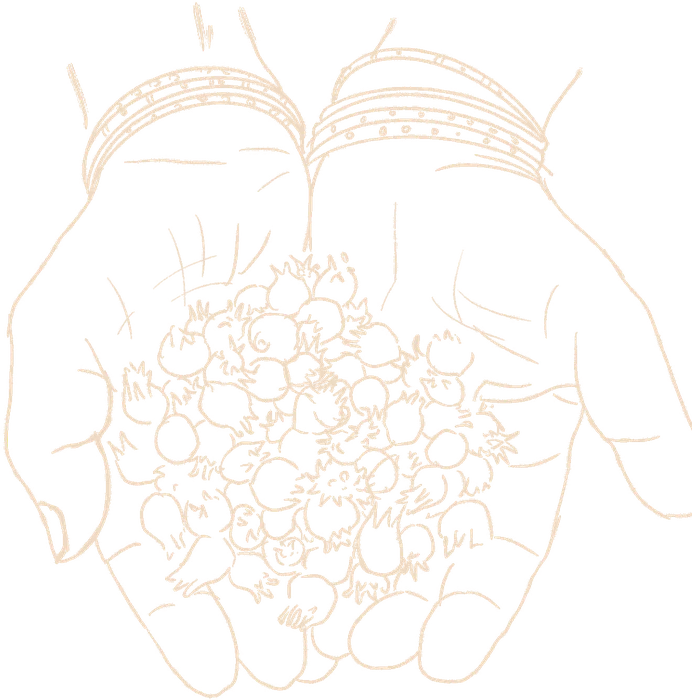
During flowering season, families collect blooms that fall naturally from the tree.
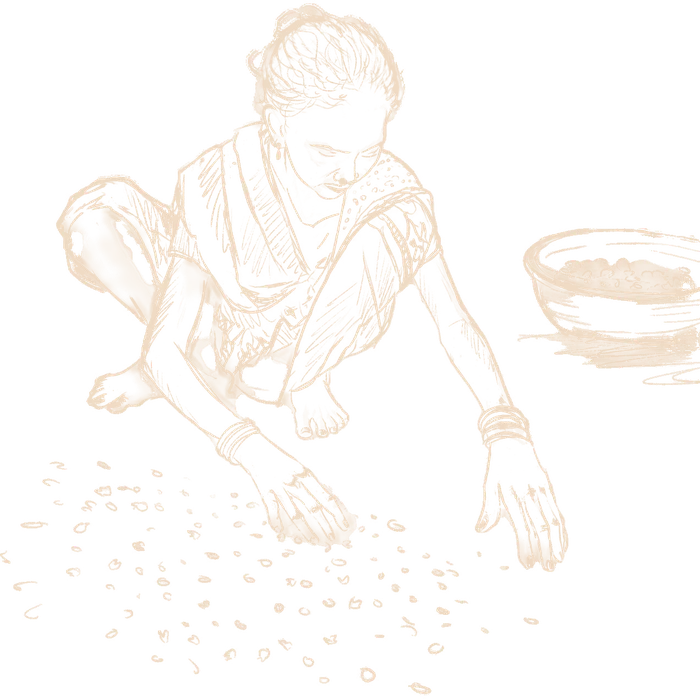
The blooms are spread out to dry and turned to draw out moisture evenly.
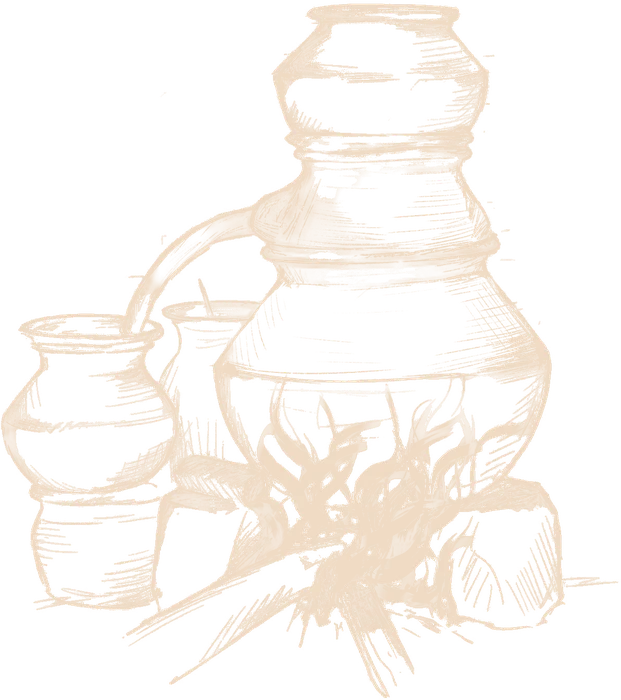
The dried flowers are fermented, then distilled in traditional pots to make a clear spirit.
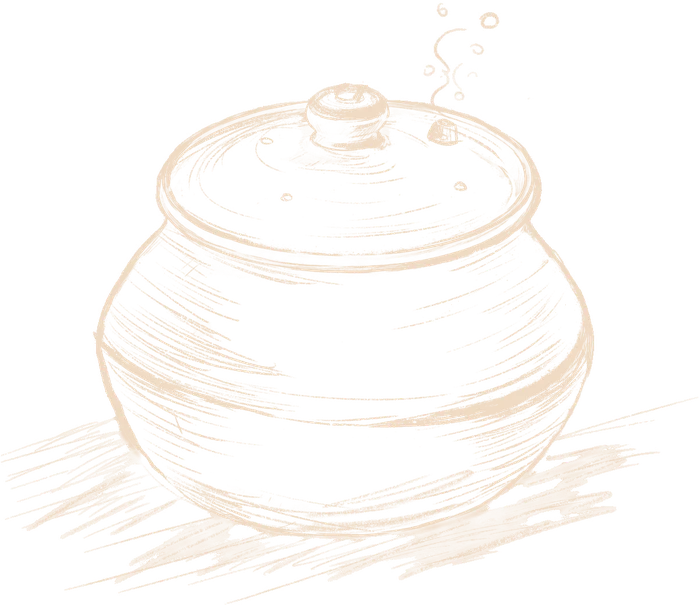
The spirit is kept to share with guests and at gatherings.
People and place
For Adivasi communities in Bastar, mahua is part of everyday food, hospitality, and seasonal work. In workshops and markets, dried gourds take on new forms as vessels, lamps, and carved objects.
Product samples
See the grain of the dried shell, the marks carved by hand, and how the red cord sits on different shapes.
Tumba, from Bastar
Pick the shape that caught your eye, ask about a Tumba for a gift, or tell us what you’d like to make together.